Meet the Wildlife
Lobster Ponds Haven is home to some of Tasmania's most extraordinary and threatened creatures.
This is a working conservation sanctuary where you'll see species most people will never encounter in the wild
Giant Freshwater Lobsters
The world's largest freshwater crustacean

They can grow nearly a metre long, weigh up to 6 kilograms, and live for over 60 years. Found only in Tasmania's northern rivers, they're now listed as a vulnerable species.
Why they matter: Lobster Ponds Haven is the only place in Australia where these lobsters have successfully bred in captivity — a historic breakthrough for conservation.
What you'll see: Lobsters hiding under logs in spring-fed ponds (use the torches to spot them). You’ll see moulted shells on display too, some from creatures older than most visitors.
Why they're endangered: Decades of overfishing nearly wiped them out. They take years, sometimes over a decade, to reach maturity. Today it's illegal to catch them. The fine? $10,000.

Orange-bellied Parrots
(Coming soon)
One of Australia's most critically endangered birds
In the early 1990s, pioneer and conservationist
Deny King alerted The Department on low population numbers of Orange-bellied Parrots at their breeding grounds of Melaleuca (remote southwest Tasmania).
By 2016, fewer that 17 remained in the wild. It was around this time that their captive breeding program started.
As recently as 2025, there are now over 80 birds returning annually to their breeding grounds in Melaleuca.
These tiny parrots (weighing less than 50 grams) undertake an extraordinary migration of thousands of kilometres between Tasmania's remote southwest and the mainland coast.
Why they matter: We're working with Parks and Wildlife Tasmania in the future to provide breeding aviaries for these critically endangered birds. After years of bureaucratic delays, they're finally here.
What you'll see: Vibrant green and yellow plumage with that distinctive orange belly patch (brighter in males). One-way glass lets you observe them without disturbing their natural behaviour.
The challenge: Habitat loss has devastated their population. They need buttongrass moorlands for breeding and coastal saltmarsh for winter feeding, both of which are severely reduced by development.

Swift Parrots
Critically endangered migrants with fewer than 1,000 left
Australia's fastest flying parrot also migrates annually from Tasmania to the mainland, feeding on flowering eucalyptus forests in Victoria, NSW, and Queensland.
Why they matter: Every breeding site counts when numbers are this low. Our aviary provides a safe haven for breeding pairs as part of broader conservation efforts.
What you'll see: Distinctive red facial markings, bright green plumage, and fast, direct flight patterns. Swift Parrots are more active and vocal than Orange-bellied Parrots. You'll often hear their chattering calls (similar to a lorikeet) before you spot them feeding on blue gum blossoms.
The threat: Introduced sugar gliders prey on nesting females and chicks. Combined with logging and land clearing, Swift Parrot numbers have crashed.

Native Finches & Wild Birds


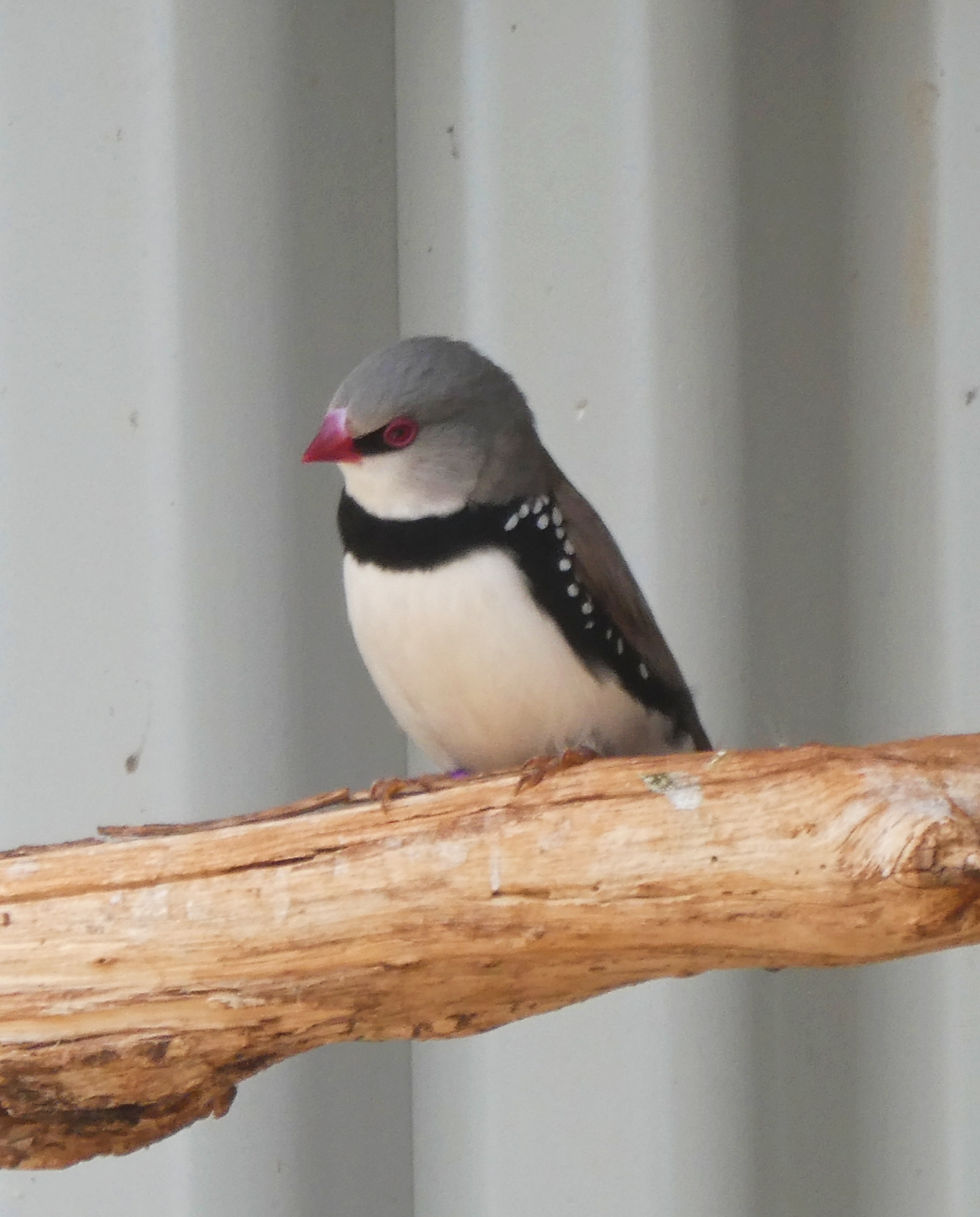
The aviaries also house stunning native finches: Diamond Firetails, Gouldian Finches, Painted Firetails, and more. There are 22 varieties of native Australian finches, and we currently have nine of them here.
Beyond the aviaries, wild birds are drawn to the sanctuary because of the rare Tasmanian flora and natural habitat. You'll see them throughout your visit.